Collection: Discover the Craft of the Yixing Clay Teapot in Everyday Use
Yixing Zisha Teapots – Graded Performance, Artisan Legacy
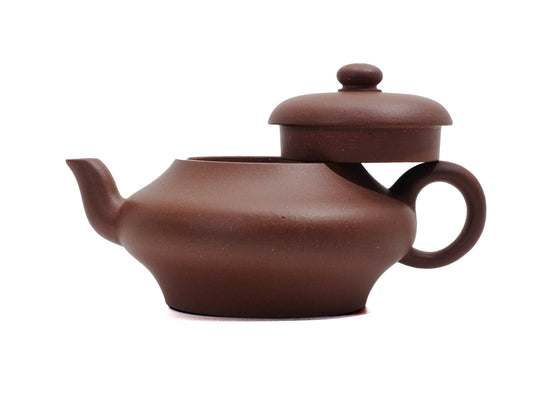
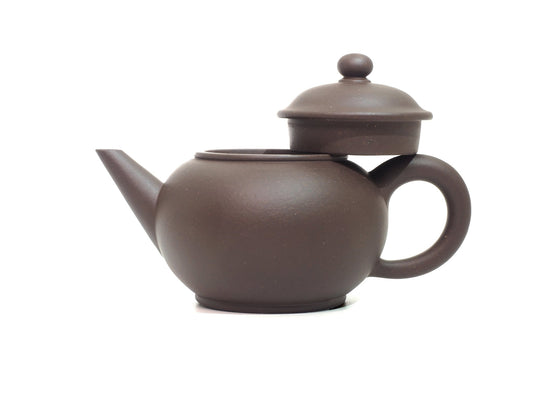
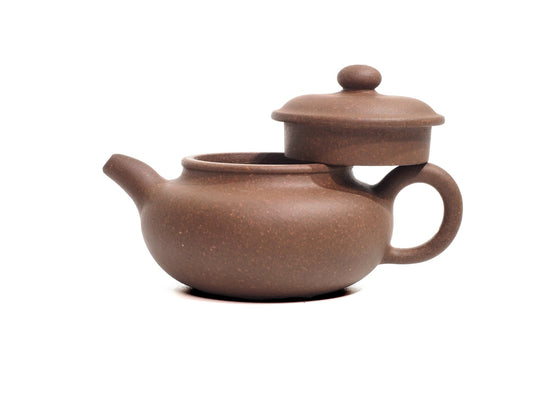
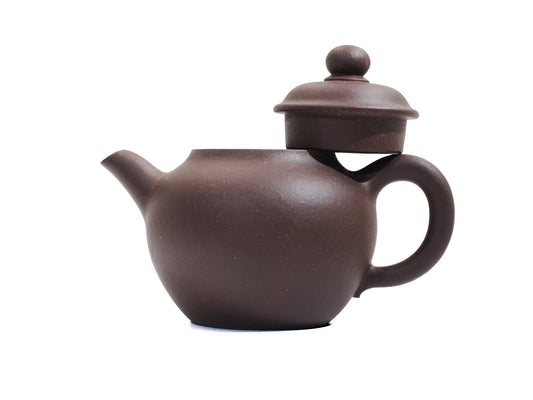
At Cha Zhi Ji, we believe a teapot should reveal the true flavor, energy, and elegance of tea. That’s why every teapot in this collection is handmade using aged ore clay from Yixing (老紫泥), refined through traditional methods and long-term cellar aging.
Our exclusive five-grade system — Diamond, Jade, Gold, Silver, and Bronze — categorizes each teapot based on how it enhances aroma clarity, body texture, and brewing softness.
- Diamond: Supreme performance in aroma, smoothness, and fullness ★★★★★
- Jade: Elegant texture, floral aroma, and balanced clarity ★★★★☆
- Gold: Warm depth and versatility for daily brewing ★★★★
- Silver: Stable and subtle — great for neutral steeping ★★★
- Bronze: Smooth and practical — a beginner-friendly option ★★★
Each pot naturally patinas with use, deepening flavor and aesthetic over time. Whether you're a seasoned Gongfu brewer or collector, find your perfect teapot here.
-
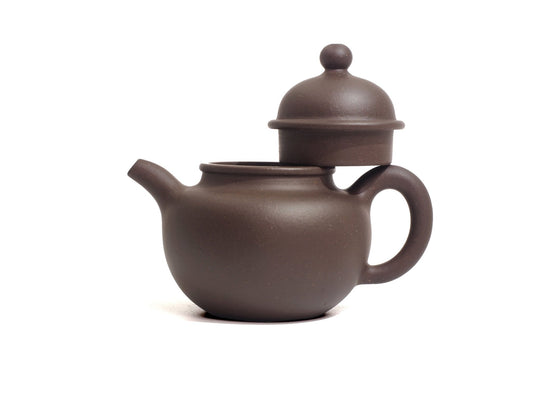
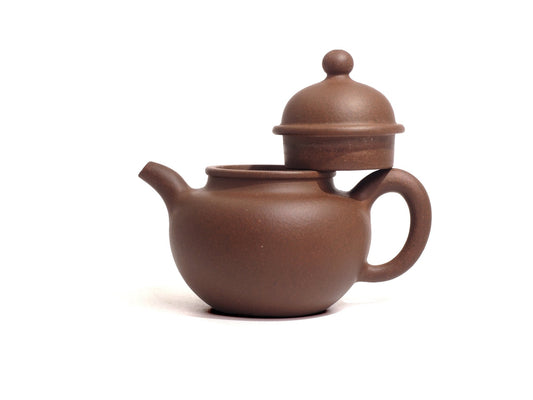
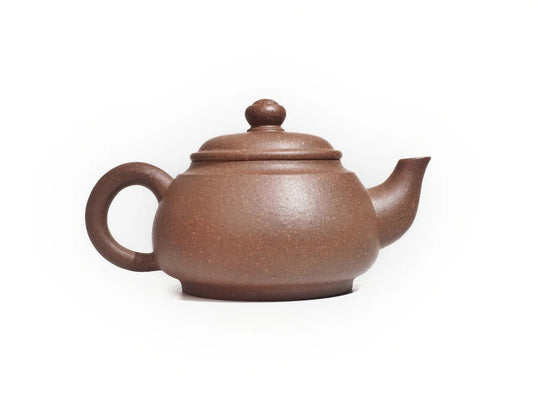
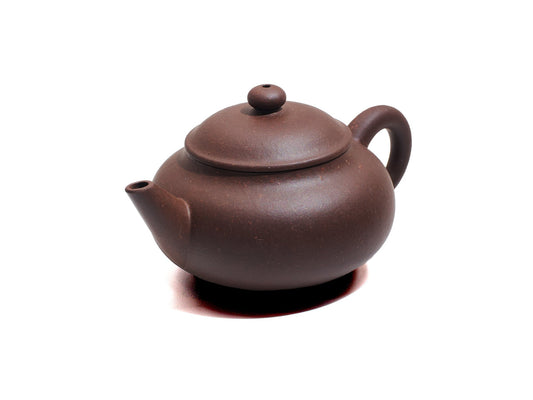
Duo Qiu Yixing Teapot – 90ml / 250ml (Bronze Grade Clay)
5.0 / 5.0
(3) 3 total reviews
Regular price From $295.00USDRegular priceUnit price / perSale price From $295.00USD -
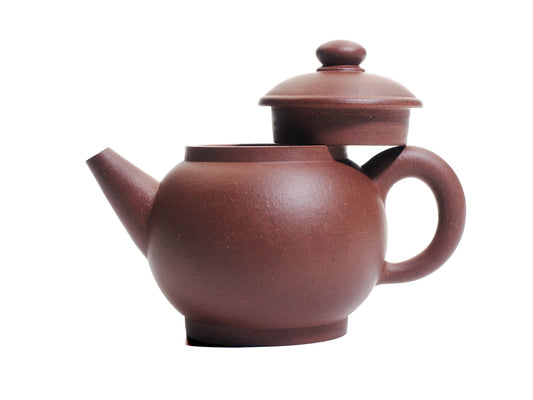
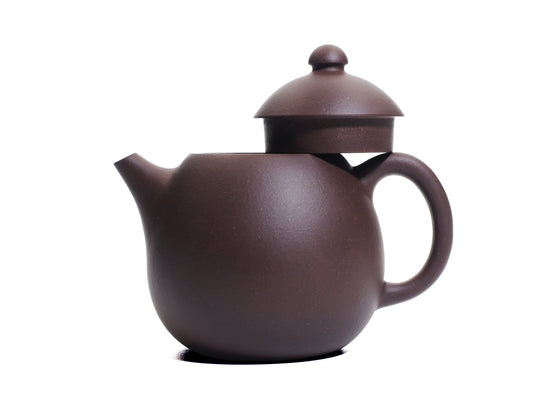
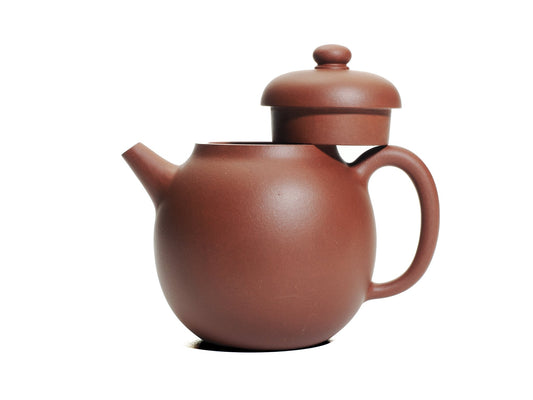
Duo Qiu Yixing Teapot – 100ml / 170ml / 230ml (Diamond Grade Clay)
Regular price From $1,317.00USDRegular priceUnit price / perSale price From $1,317.00USD -
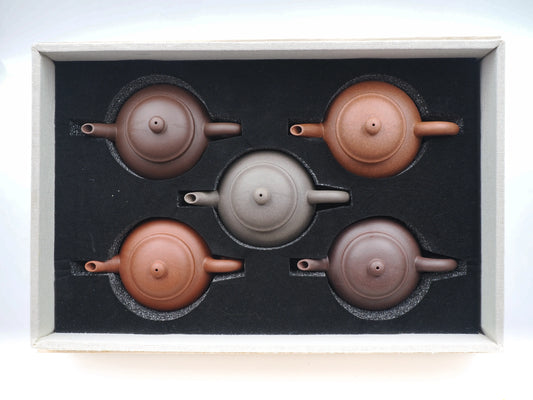
30th Anniversary "Five Blessings" Mo Yuan Zhai Teapot Set (5 Clay Grades)
Regular price $3,224.00USDRegular priceUnit price / perSale price $3,224.00USD -
Ju Lun Zhu Yixing Teapot – 120 ml Diamond‑Grade Purple Clay
5.0 / 5.0
(3) 3 total reviews
Regular price $1,317.00USDRegular priceUnit price / perSale price $1,317.00USD -
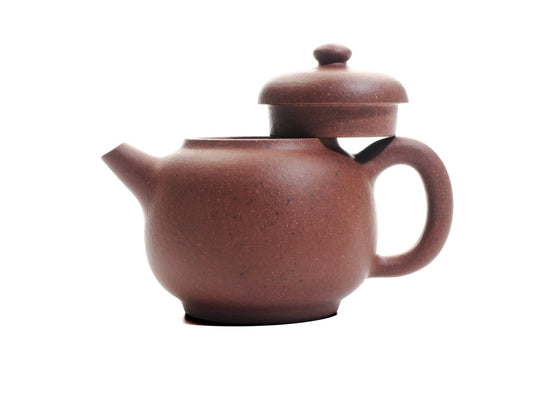
Wu Yun Teapot - 110ml - Silver Grade
5.0 / 5.0
(2) 2 total reviews
Regular price $354.00USDRegular priceUnit price / perSale price $354.00USD -
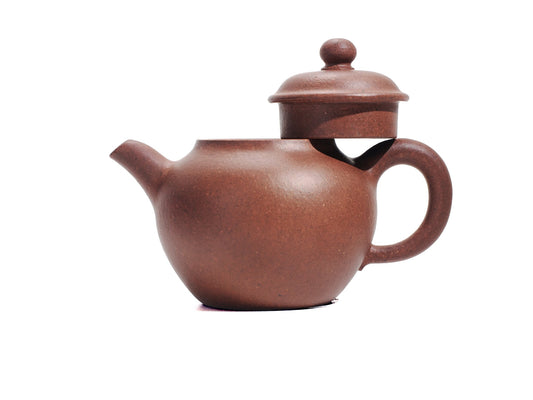
Da Long Dan Teapot – 290 ml Bronze Grade Dragon Egg Yixing Teapot
Regular price $480.00USDRegular priceUnit price / perSale price $480.00USD -
Xiao Da Bin Handmade Yixing Purple Clay Teapot – 50 ml Diamond Grade
Regular price $800.00USDRegular priceUnit price / perSale price $800.00USD -
Cha Zhi Ji – Qiu Shui Hu (秋水壶) Yixing Teapot | 45ml Diamond Grade Purple Clay
Regular price $675.00USDRegular priceUnit price / perSale price $675.00USD -
Biandeng Yixing Teapot 125ml (Raw Ore Zisha Clay)
Regular price $380.00USDRegular priceUnit price / perSale price $380.00USD -
16 Cup Shui Ping Yixing Teapot – 220ml (Bronze Grade Zisha Clay)
5.0 / 5.0
(1) 1 total reviews
Regular price $245.00USDRegular priceUnit price / perSale price $245.00USD -
Fang Gu Teapot - 110ml - Silver Grade
Regular price $354.00USDRegular priceUnit price / perSale price $354.00USD -
Yi Gong Qiu Shui Yixing Teapot – 50ml / 80ml (Bronze Grade Clay)
5.0 / 5.0
(1) 1 total reviews
Regular price $295.00USDRegular priceUnit price / perSale price $295.00USD -
Cha Zhi Ji – Junde Yixing Teapot – 50ml (Bronze Grade Clay)
Regular price $275.00USDRegular priceUnit price / perSale price $275.00USD -
Hong Pi Long Ming‑Style Da Long Dan Teapot – 265 ml Zhao Zhuang Hong Ni
Regular price $450.00USDRegular priceUnit price / perSale price $450.00USD -
Da Ming Yuan Luo Han Yixing Teapot – 250 ml Bronze‑Grade Purple Clay
Regular price $450.00USDRegular priceUnit price / perSale price $450.00USD -
10-Cup Shui Ping Yixing Teapot – 165ml (Bronze Grade Purple Clay)
Regular price $245.00USDRegular priceUnit price / perSale price $245.00USD
Yixing Teapot FAQ
What is a Yixing teapot?
A Yixing teapot is made from zisha ore mined in Yixing, Jiangsu Province, China — refined, hand-formed by paddling and shaping, then fired at high temperature. "Zisha" isn't one color; it's the umbrella term for the whole clay family, which includes zini (purple clay), zhuni (vermilion clay), hongni (red clay), and duanni (segment clay), among others.
The defining trait is that it's unglazed — firing leaves the walls full of microscopic pores of varying size, what traditional zisha scholarship calls a "double-pore structure." That's what gives the clay its breathability and heat retention, helping the pot hold a stable brewing temperature so the tea's flavor comes through more balanced and rounded.
How do you season a Yixing teapot?
With a new pot, warm it with hot water first and rinse it inside and out so the clay adjusts to temperature. After every session, empty the spent leaves promptly, rinse inside and out with clean water, wipe gently with a soft tea cloth, then air-dry somewhere well-ventilated.
Don't let spent leaves sit in the pot, and there's no need to rub in tea oil or anything else — the patina comes purely from ongoing use and everyday care. With repeated brewing, wiping, and handling, the surface gradually turns smoother and takes on a soft, natural sheen.
Many drinkers follow "one pot, one tea" — using the same pot exclusively for one tea long-term, so pot and tea attune to each other and the tea's own character comes through more clearly.
How do you use and clean a Yixing teapot?
It suits standard Gongfu-style brewing — one measure of leaves, steeped across multiple short infusions.
Keep the pot away from oil, perfume, or anything strongly scented, since that can affect how the tea tastes. Clean with plain water only — never soap or anything scented or chemical.
If it won't be used for a while, make sure the inside is fully dry before storing; don't seal it away damp.
For our full daily care routine, see How We Clean and Care for Our Yixing Teapots Daily.
How can you tell if a Yixing teapot is authentic?
Genuine zisha has a natural feel — a soft, matte finish with a faint gritty, sandy texture, never overly smooth or glassy.
Most Yixing teapots are hand-formed, so the body, spout, handle, and lid feel proportionate and the lines look natural rather than mechanical.
Judging quality really means looking at the clay, the craftsmanship, the firing, and how it performs in use, together — not any single signal. A good pot develops its sheen gradually through brewing, wiping, and time; the change is organic, not a coating applied to fake the shine.
What determines a Yixing teapot's value?
Mainly the clay, the craftsmanship, and how it performs in use. Good zisha ore is a limited resource, and quality clay needs an aging process before it's usable. Traditional Yixing teapots are largely hand-formed — from paddling and shaping the clay through refining and firing — and every step shapes the final quality. A skilled maker's craftsmanship is what lifts a pot's value beyond just its materials.
Read more about that craftsmanship in Master Zhou Qikun's collaboration with Cha Zhi Ji.
Are Yixing teapots safe to use?
Yes. Zisha is natural clay fired at high temperature, unglazed, with no chemical coating changing its surface — the tea sits directly against the pot's natural stoneware, part of why it preserves the tea's own character so well.
Once fired, the clay forms a stable stoneware structure; a properly made, quality pot is safe for direct contact with hot water and tea under normal brewing use. It's been a traditional Chinese tea vessel for centuries — choosing a properly made, reliably sourced pot is the real basis for using it with confidence.
Cha Zhi Ji Yixing teapot grades and performance
Every Cha Zhi Ji teapot is graded Bronze, Silver, Gold, Jade, or Diamond based on the clay's quality, the craftsmanship, and how it performs in brewing. Cha Zhi Ji's aged purple clay (老紫泥) has a fine, pure texture, carefully refined, chosen specifically to make tea taste rounder and more harmonious in the cup.
Brewing with a premium aged-clay Cha Zhi Ji pot produces a warm, full-bodied character — the kind of depth traditional antique zisha pots develop after years of use, echoing the brewing character sought after with old pots from the Ming, Qing, and Republican eras.